Author: es_admin

SMSF Investment Strategy: Do Your Asset Allocations Align With The Financial Statements?

For self-managed super funds (SMSFs), the investment strategy is more than a compliance document. It is the written plan that explains how the trustees intend to invest, hold and realise assets to meet the fund’s objectives and the retirement goals of its members.

When preparing the SMSF’s annual financial statements, one important step is checking whether the fund’s actual asset allocation aligns with the investment strategy on file. If the financial statements show an asset mix that sits outside the strategy’s stated ranges, the strategy should be reviewed and, where appropriate, updated before the fund is sent to audit.

Why the Investment Strategy Matters

Superannuation law requires SMSF trustees to prepare, implement and regularly review an investment strategy. The strategy should be in writing, tailored to the fund’s circumstances and explain why the chosen investments are appropriate for the members’ needs.

A good investment strategy should not simply repeat the legislation or rely on a generic template. It should reflect the fund’s objectives, member circumstances, risk appetite, expected returns, diversification, liquidity needs, ability to pay liabilities and whether insurance for members has been considered.

Asset Allocations Need to Match the Financial Statements

Most SMSF investment strategies include target asset allocation ranges. These ranges might cover categories such as Australian shares, international shares, cash, fixed interest, property, managed funds, cryptocurrency or other investments.

When the annual accounts are prepared, the asset allocation shown in the financial statements should be compared against the investment strategy. If the fund’s actual investments fall outside the documented ranges, this can indicate that the strategy is no longer being followed or is no longer appropriate for the fund’s current position.

For example, if the strategy allows 0% to 40% in property but the financial statements show that property represents 75% of the fund’s assets, the trustee minutes and investment strategy should be reviewed before the file is sent to audit. The issue may not be that the investment itself is prohibited, but that the documented strategy does not support the fund’s actual investment position.

What to Do Before Sending the Fund to Audit

Before the SMSF is sent to audit, the accountant, administrator or trustee should check that the investment strategy is current and consistent with the financial statements. This should be part of the annual review process, not something left until the auditor raises a query.

Practical steps include:

  • Compare the asset allocation in the financial statements with the ranges listed in the investment strategy.
  • Identify any asset classes that fall outside the approved ranges.
  • Consider whether the current strategy still reflects the fund’s investment objectives and member circumstances.
  • Review whether the strategy adequately addresses risk, return, diversification, liquidity and insurance.
  • Prepare trustee minutes documenting the review and the reasons for any changes.
  • Update the investment strategy before audit if the current document no longer supports the fund’s actual investments.

A template the trustees can use to assist in meeting their obligations can be downloaded at the following link: Investment Strategy Template.

Updating the Strategy Does Not Mean Backdating Decisions

If an update is required, it should be done properly. The trustees should review the current circumstances of the fund and document their decision at the time the review is undertaken. The strategy should not be treated as a document that is simply adjusted after the fact without proper trustee consideration.

The updated strategy should explain why the current asset allocation is appropriate. For example, if the fund is heavily invested in property, the trustees should consider and document how they will manage concentration risk, liquidity, expenses, pension payments and any loan repayments.

ATO Expectations and Audit Implications

The Australian Taxation Office expects SMSF trustees to have an investment strategy that is tailored to the fund and reviewed regularly. The strategy should explain how the fund’s investments support the members’ retirement objectives and should be implemented in practice.

If the investment strategy is outdated, generic, not reviewed or inconsistent with the fund’s actual investments, the auditor may need to raise the issue with the trustees.

Keeping the strategy aligned with the financial statements helps demonstrate that the trustees have actively considered the fund’s investments and are managing the SMSF in line with the ATO’s guidance.

Why the Annual Review Is Important

An SMSF’s investments can change significantly over a year. Market movements, property revaluations, pension payments, contributions, rollovers, acquisitions and disposals can all affect the fund’s asset allocation. Even if trustees have not intentionally changed their investment approach, the financial statements may show that the fund has moved outside its documented strategy.

This is why the investment strategy should be reviewed annually when the accounts are prepared. The review should confirm whether the existing strategy remains appropriate or whether changes are required to reflect the fund’s current assets and member circumstances.

Final Thoughts

An SMSF investment strategy should be a live document that reflects the fund’s actual investment position and the members’ retirement objectives. Before sending an SMSF to audit, trustees and advisers should check that the asset allocations in the financial statements align with the ranges and objectives in the investment strategy.

If the asset allocations do not align, the strategy should be reviewed and updated before audit. This simple step can help reduce audit queries, support compliance with ATO guidelines and show that the trustees are actively managing the fund in the best financial interests of the members.

What Is Required for an SMSF Commercial Property Valuation?

For self-managed super funds (SMSFs) that hold commercial property, obtaining appropriate valuation evidence each year is an important part of the annual compliance process. The value recorded in the SMSF financial statements must reflect market value at 30 June and be supported by objective, reliable information that can be provided to the fund’s auditor.

Commercial property valuations generally require more detailed evidence than residential property valuations. This is because the value of a commercial property is often influenced not only by comparable sales, but also by lease terms, rental income, tenant profile, incentives, outgoings, vacancy risk, zoning, location, property condition and market yields.

Annual Valuation Timing

Property valuations are required to be performed each year between 1 April and 30 November. This timing helps ensure the valuation evidence is relevant to the 30 June reporting date for the relevant financial year, as required under SIS Regulation 8.02B.

Although the valuation may be obtained before or after 30 June, trustees should make sure the valuation clearly supports the market value of the residential property as at 30 June.  Keeping valuation evidence within this window also helps reduce delays during the SMSF audit process.

Why Commercial Property Requires Stronger Evidence

Commercial property is often valued using a combination of market evidence and income-based analysis.  An auditor needs enough information to understand how the valuation was reached and whether the value is reasonable.  A brief letter stating a value is unlikely to be sufficient on its own.

For commercial property, the valuation evidence should generally consider the property’s physical characteristics, location, zoning, permitted use, lease arrangements, rental income, comparable sales and comparable rental or yield data. Where the tenant is a related party, the evidence should also help support that the lease is on commercial terms.

Online Auto Valuations Are Not Appropriate for Commercial Property

Online automated valuation reports are not sufficient be used as valuation evidence for SMSF commercial property. These tools are generally designed around residential market data and do not adequately assess the factors that commonly drive commercial property values.

If the SMSF holds commercial premises, trustees should instead obtain an appropriately detailed commercial property appraisal or valuation supported by objective evidence.  In many cases, particularly for higher-value, specialised, related-party or hard-to-value properties, a qualified independent valuer is the preferred option.

What an Agent Commercial Property Appraisal Must Include

A real estate agent prepared commercial property appraisal must include enough detail for the trustee, accountant and auditor to understand the basis of the value. The report should not simply state a figure; it should explain the evidence and assumptions used to arrive at that figure.

At a minimum, an agent appraisal should include:

  • The assessed market value of the commercial property.
  • A description of the property, including address, property type, land area, building area, condition and any relevant improvements.
  • At least three comparable sales that are relevant to the property’s location, type, size and condition.
  • Comparable sales being recent, that is within 12 months of the valuation date, being 30 June.
  • A clear explanation of the valuation method and how the final value was determined.

In some instances, an agent may form the opinion the capitalisation rate or yield adopted, where an income-based method is used is a more suitable appraisal method.  This is not suitable alone and therefore would also require a market rental assessment to be performed, which would require three comparable rentals listed and supporting evidence of the capitalisation rate or yield adopted.

Comparable Sales and Rental Evidence

Comparable sales remain important because they provide objective evidence that the valuation reflects the market.

Comparable sales should be recent and involve similar commercial properties in the same suburb or a closely comparable area. If recent sales are limited, the report should explain why the selected evidence is still relevant and how adjustments have been made.

Rental evidence is also important. If the property is leased, the report should consider whether the current rent is consistent with market rent. Where the tenant is a related party, this becomes especially important because the fund must be able to demonstrate that the arrangement is on arm’s-length commercial terms.

What If the Evidence Is Not Sufficient?

If the valuation evidence does not include enough detail, the auditor may not be able to rely on it.  For example, evidence may be insufficient if it only states a value, relies on unsuitable residential-style data, or does not explain how the value was calculated.

Where evidence is insufficient, trustees may need to obtain additional supporting information, request a more detailed commercial appraisal, or engage a qualified independent valuer. It is better to address these issues before the audit is underway rather than waiting until the auditor raises a query.

Alternative options to an agent prepared appraisal include:


Trustee Responsibilities

The trustees are responsible for ensuring the SMSF’s commercial property is reported at market value and that the value is supported by appropriate evidence. The auditor’s role is not to value the property, but to review the evidence provided and determine whether it is sufficient for audit purposes.

Trustees should obtain valuation evidence early, check that it includes the required details and keep a copy with the fund’s annual records. They should also retain supporting documents such as leases, rent schedules, outgoings information, rates notices, insurance details, recent sale evidence and any correspondence from agents or valuers.

Where there is uncertainty, trustees should speak with their SMSF accountant, auditor or adviser before finalising the fund’s accounts. This is particularly important where the property is leased to a related party or where the valuation could affect member balances, pension calculations or other SMSF reporting obligations.

Final Thoughts

Annual commercial property valuations are a key part of SMSF compliance. Because commercial property values are affected by income, lease terms, tenant quality and market yields, the evidence needs to be detailed and commercially relevant. Online automated valuations should not be relied upon for SMSF commercial property.

By arranging valuation evidence close to 30 June, ensuring the report includes comparable sales, rental evidence and a clear valuation methodology, and engaging a qualified independent valuer where appropriate, trustees can help make the audit process smoother and ensure the fund’s reporting is properly supported.

SMSF Residential Property Valuations: What Trustees Need to Know Each Year

For self-managed super funds (SMSFs) that hold residential property, obtaining the right valuation evidence each year is an important part of the annual compliance process. The value recorded in the SMSF financial statements must be relevant to 30 June and supported by objective, reliable information that can be provided to the fund’s auditor.

Annual Valuation Timing

Property valuations are required to be performed each year between 1 April and 30 November. This timing helps ensure the valuation evidence is relevant to the 30 June reporting date for the relevant financial year, as required under SIS Regulation 8.02B.

Although the valuation may be obtained before or after 30 June, trustees should make sure the valuation clearly supports the market value of the residential property as at 30 June.  Keeping valuation evidence within this window also helps reduce delays during the SMSF audit process.

Online Auto Valuations

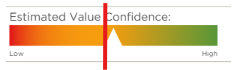
Online auto valuations are common appraisals used in the industry and can be a practical option for supporting the value of an SMSF residential property. However, the confidence level shown in the report must be medium or higher to be relied upon, see below, the indicator point needs to be to the right of the red line.  If this is not the case, the online appraisal is not appropriate and an agent appraisal or independent valuation will be required.

What an Agent Appraisal Must Include

An appraisal from a real estate agent can be used as valuation evidence, provided it contains enough detail to support the value used by the SMSF. A brief letter stating a value is generally not enough. The appraisal should include the appraisal amount and clear supporting evidence showing how that amount was reached.

At a minimum, an agent appraisal should include:

  • The appraised market value or valuation amount.
  • At least three comparable sales that are relevant to the property’s location, type, size and condition.
  • Comparable sales being recent, that is within 12 months of the valuation date, being 30 June.
  • A clear basis for how the agent arrived at the appraisal amount.

Why Comparable Sales Matter

Comparable sales are important because they provide objective evidence that the appraisal amount reflects the market. For SMSF audit purposes, the comparables should be sufficiently recent and relevant. Where possible, the sales should involve similar residential properties in the same suburb or a closely comparable area.

If the comparable sales are too old, too different from the SMSF property, or not clearly connected to the appraisal amount, the auditor may not be able to rely on the appraisal as sufficient evidence.

What If the Agent Cannot Provide the Required Evidence?

If an agent cannot provide an appraisal amount supported by three comparable sales within 12 months of 30 June, trustees will need to consider an alternative valuation option.  This helps ensure the SMSF has appropriate evidence on file before the audit is completed.

Alternative options include:

Trustee Responsibilities

The trustees are responsible for ensuring the SMSF’s residential property is reported at market value and that the value is supported by appropriate evidence. The auditor’s role is not to value the property, but to review the evidence provided and determine whether it is sufficient for audit purposes.

For this reason, trustees should obtain valuation evidence early, check that it contains the required details, and keep a copy with the fund’s annual records. Where there is uncertainty, trustees should speak with their SMSF accountant, auditor or adviser before finalising the fund’s accounts.

Final Thoughts

Annual residential property valuations are a key part of SMSF compliance. By arranging valuations between 1 May and 31 October, ensuring agent appraisals include the appraisal amount and three recent comparable sales, and using an alternative valuation provider where required, trustees can help make the audit process smoother and ensure the fund’s reporting is properly supported.

Director Identification

What is a Director Identification Number (director ID) and do I need one?

You may have heard about the new rules which require directors of Australian companies to obtain a Director Identification Number (director ID). The new requirement to obtain a director ID also applies to individuals who have an SMSF with a corporate trustee, which is why I wanted to bring this new requirement to your attention. All directors of your corporate trustee will need to apply for their own director ID by the prescribed deadline.

This document provides some important information about Director Identification Numbers, including how to apply for one and by when.

An application for a director ID must be made individually and only by those who are applying for the director ID. As you are required to prove your identity as part of the process, our firm, or any other third party, is not able to apply for a director ID on your behalf.


What is a Director Identification Number (director ID)?

A director ID is a unique identifier that directors need to apply for, like a tax file number. If you are a director of multiple companies, you are only required to have one director ID that will be used across all companies. You will keep your director ID forever even if you change companies, resign altogether from your director role(s), change your name, or move overseas.


Why do I need a Director Identification Number?

As part of the Government’s Digital Business Plan, it is rolling out a Modernising Business Registers program which includes the introduction of director IDs. The main purpose is to prevent the use of false or fraudulent director identities as well as to improve the efficiency of the system by making it easier to meet registration obligations and trace director activity and relationships. By improving the integrity and security of business data it is expected to reduce the risk of unlawful activity.


How do I apply for a Director Identification Number?

There are 3 key steps to apply for your director ID.

Step 1: Set up myGovID – If you do not already have a myGovID you will need to set this up before you can apply for your director ID online. You can find information on how to setup your myGovID by downloading the app at:  https://www.mygovid.gov.au/set-up

Step 2: Gather your documents – You will need to gather some information that the ATO already knows about you to verify your identity. You will need your tax file number, your residential address held by the ATO, and information from two of the following documents:

  • Bank account details
  • ATO notice of assessment
  • Super account details
  • Dividend statement
  • Centrelink payment summary
  • PAYG payment summary

Most of this information can be downloaded from your myGov account so it may be worthwhile linking to this service ahead of applying for your director ID. Note, myGovID is different to your myGov account. Your myGov account allows you to link to and access online services provided by the ATO, Centrelink, Medicare and more, while myGovID is an app that enables you to prove who you are and to log in to a range of government online services, including myGov.

Step 3: Complete your application – Once you have a myGovID and information to verify your identity, you are ready to apply for your director ID. You can click on the following link to start the application process. The application process is quick and should take you less than 5 minutes.

https://abrs.gov.au/persons/ui/secure/start/applyForDirectorID?action=applyfordirectorid

Further information about the application process, and step-by-step instructions, can be found via this link: https://www.abrs.gov.au/director-identification-number/apply-director-identification-number


By when do I need to have a Director Identification Number?

The director ID deadline depends on when you were first appointed as a director of any Australian company. This may or may not be when your SMSF corporate trustee company was established. Please contact our office if you are unsure which deadline applies to you.

Date you first become a director Date by when you must have applied for a Director Identification Number
On or before 31 October 2021 By 30 November 2022
Between 1 November 2021 and 4 April 2022 Within 28 days of appointment
From 5 April 2022 Before appointment